Live Broadcast Tonight
If you walk into this moment expecting a single cause, you will miss what is actually happening. What most people are living is not a “crisis” in the loud, breaking-news sense. It’s depletion. The feeling that something once load-bearing has gone thin. still standing, still operating, but no longer self-stabilizing. That is what this presentation names as Live Broadcast Link America’s structural integrity problem: institutions continuing procedurally, while legitimacy is increasingly maintained through repetition, enforcement, and symbolic continuity rather than shared belief or consent.
Tonight is not a talk about faith, and it’s not a talk about politics in the way we’re trained to discuss politics. Faith is only one sector where the numbers happened to get measured cleanly. The deeper claim is structural: societies don’t require total participation to function, but they do require a critical mass, what this work calls participation density. When enough people stop supplying belief, compliance, labor, attention, and narrative reinforcement, the system doesn’t “argue” with them. It strains. It compensates. It gets louder while becoming less effective.
The key distinction here is collapse as withdrawal, not chaos. Withdrawal happens privately and cumulatively, long before it becomes publicly visible. That’s why destabilization can feel sudden even when it has been building for years. The chart you’ll see early in this deck, “Systemic Response to Withdrawal: Progression of Structure Visibility”, puts language to what many people already sense: at the margins the system absorbs dissent, then strain appears, then legitimacy fractures, and beyond a threshold coordination breaks. The public story calls it polarization; structurally, it’s participation falling below what the system was built to carry.
This framework also refuses a comforting myth: that majorities are natural, neutral, and simply “what most people want.” In the U.S., “majority” has been an engineered achievement, first stabilized through racial construction, then re-stabilized through ideology, and increasingly through moral framing when older attachments thin. The images in this deck that trace how “white” became the majority, and how that attachment migrates into values-based alignment, are not included to provoke. They are included to show mechanism: the system has always depended on manufactured cohesion, not organic consensus.
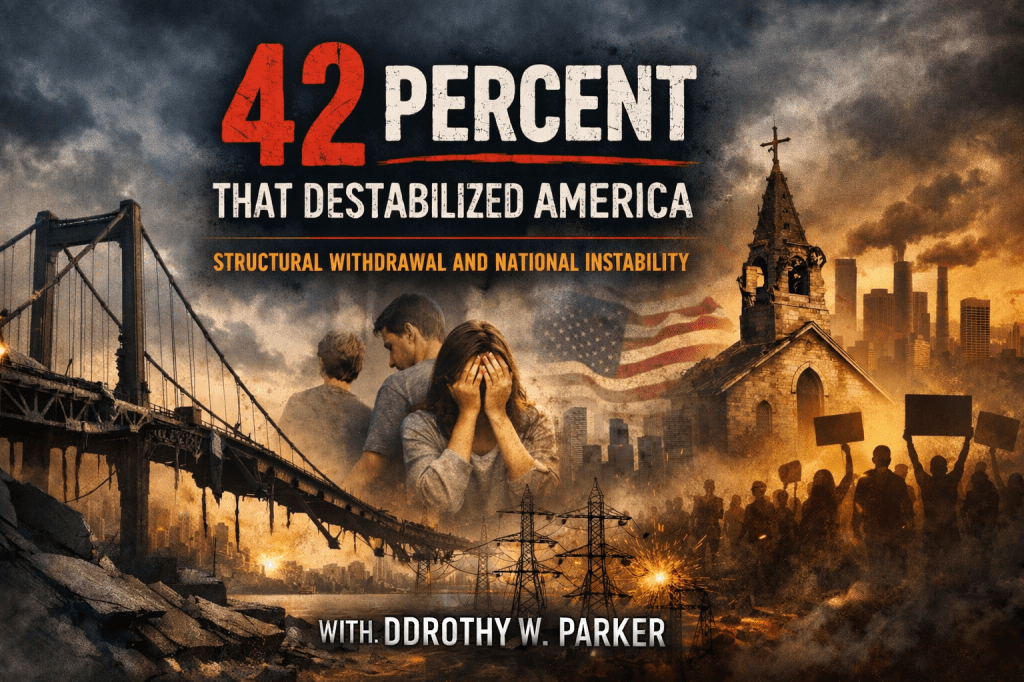
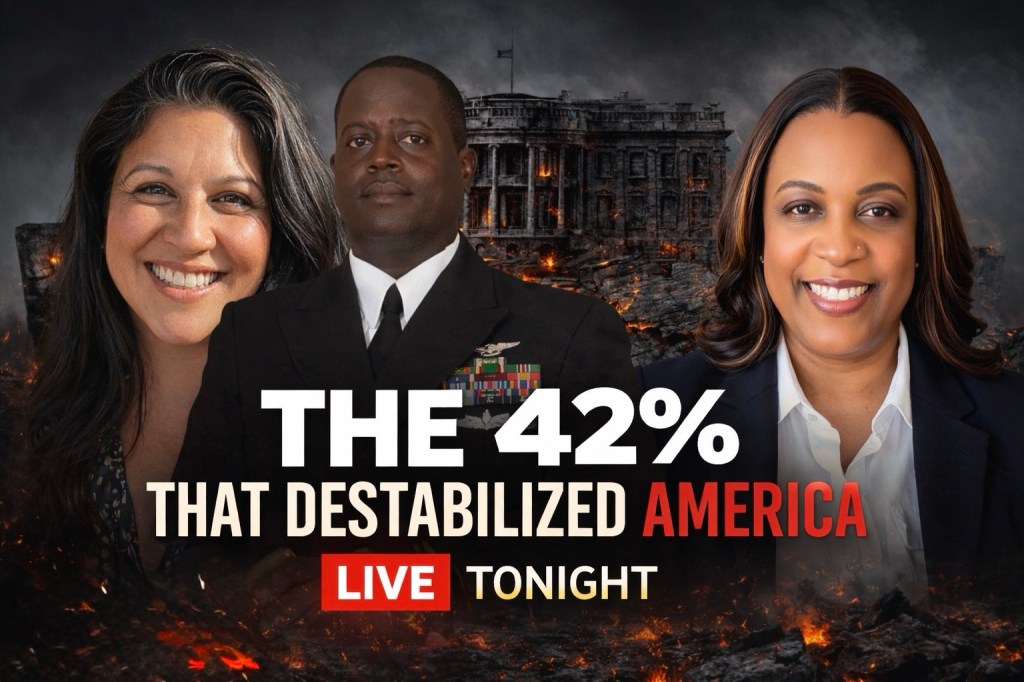
And that brings us to the number in the title. The “42 percent” is not a slogan and not a voting statistic. In the policy brief, it is described as a completed withdrawal event, an irreversible threshold crossing where recruitability to existing majority frameworks has already collapsed. Once internal withdrawal is real, persuasion fails, not because people are stubborn, but because persuasion presumes attachment, and attachment has been severed. That’s why escalation feels frantic right now: moral urgency, enforcement, messaging intensity, volume rising where support underneath is thinning.
So the purpose of this presentation is not to recruit you into a position, and it is not to offer fixes that assume shared trust still exists. This work ends where it begins: with recognition. To see clearly what has already happened, to notice where the structure is hollow but still moving, and to understand why familiar solutions fail once participation density drops below the load-bearing threshold. If you can see the mechanics without needing to moralize them, you can finally name what so many people feel but cannot articulate? without dramatizing it, and without looking away
Join Us On



 Transform
Leave a comment