

There is a shift happening in Black America that cannot be measured by protest counts, voting data, or social media volume. It is quieter than that, and because of this, many are misreading it as indifference. It is not. What is taking place is a conscious disengagement from a system that has depended on Black emotional labor for its survival. This disengagement is not rooted in ignorance or fatigue with information. It is rooted in understanding.
For generations, Black people in America have been positioned as the emotional engine of the nation’s moral crises. Our anger has been summoned to expose injustice, our pain displayed as evidence, our resistance used as proof that the system is still capable of self-correction. Even opposition has served a purpose for the structure itself. Engagement, whether in protest, debate, or outrage, has always provided energy that allowed the system to recalibrate and continue.
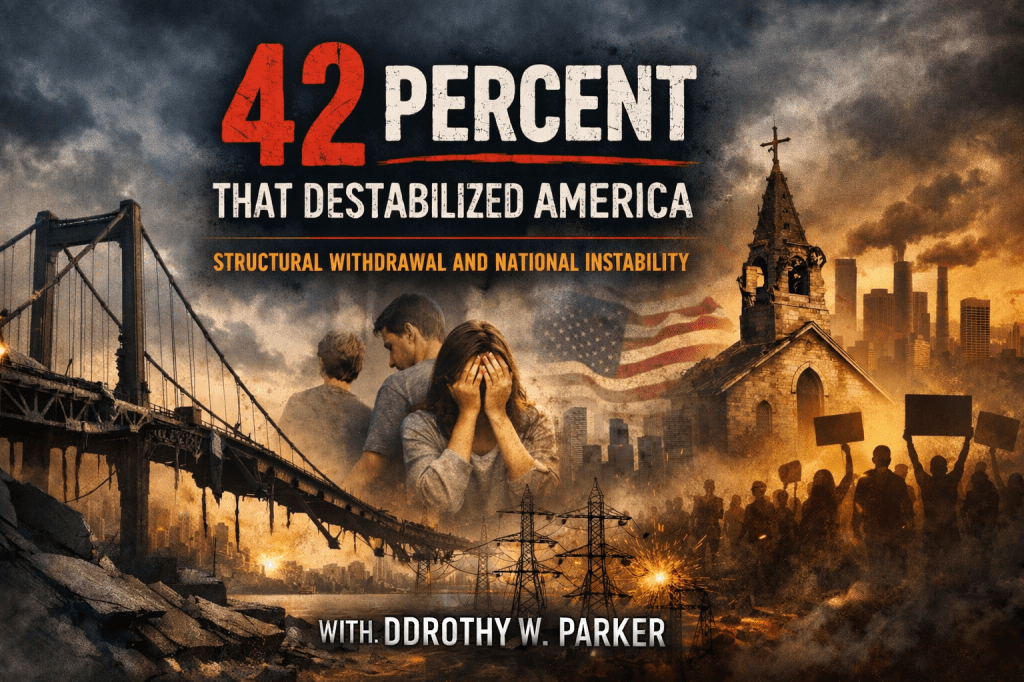
Since the last election, something has shifted. Many Black Americans have chosen to step out of that role. Not because the conditions have improved, and not because the harm has stopped, but because the pattern has become unmistakable. Engagement no longer advances transformation; it stabilizes dysfunction. Non-engagement, in this moment, is not avoidance. It is discernment.
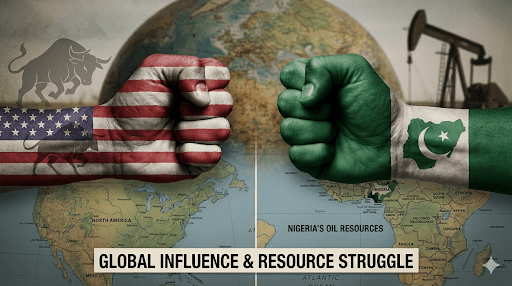
This is why the current administration’s behavior feels increasingly erratic and aggressive. When a system loses access to the energy it has relied on, it begins to provoke. Africa, the ancestral homeland of Black people globally, has once again become a site of escalation. This is not coincidental. Destabilization abroad has long been used to reignite emotional investment at home. War functions as a mechanism of control when legitimacy erodes.
Black America is not unaware of what is happening on the global stage. We see the atrocities. We acknowledge the suffering. What we refuse is emotional conscription into a collapsing structure that feeds on chaos. The war on Africa will not draw us back into the fight. We are no longer mistaking violence for leadership or dominance for moral authority.
What is particularly unsettling for white America is not Black opposition, but Black refusal. Historically, whiteness in America has defined itself in relation to Black presence, through control, reaction, resentment, or dependence on response. When Black people disengage, that relational axis collapses. There is no enemy to mobilize against, no mirror to project onto, no moral drama to perform. The absence exposes the fragility underneath.
This moment is often described as a rise in authoritarianism or dictatorship, but at its core it is a crisis of coherence. America is acting from desperation rather than vision, from force rather than legitimacy. This is not the posture of a nation expanding in strength; it is the posture of one contracting under the weight of its own unresolved contradictions.
Black disengagement is not a declaration. It is a position. It is watchful, deliberate, and protective. It is the understanding that true progress requires the preservation of internal stability, not endless reaction to external collapse. What is being built now does not need to announce itself, because it is not dependent on recognition from a system that is losing its center.
Non-engagement is not surrender.
It is the withdrawal of consent.
And when consent is withdrawn, the system must finally confront itself, without our energy holding it upright.



 Transform
Leave a comment