Understanding rejection and five strategies to overcome the mental hangover of rejection!

Growing up I had a fun childhood. I was the seventh of nine children. But I remember feeling alone a lot. My memories of rejection seem to stem from being sick all the time as a child. I was born with a heart murmur which caused me to experience extreme fatigue. It’s funny because it wasn’t until I was around ten years old that I was diagnosed with the issue.
The murmur never healed and fatigue is still a major part of my life. I still experience that same feeling of rejection. I’ve never understood it, but it’s always been with me. I realize that it’s not just what’s happening outside of me, but it has a great deal to do with what’s happening inside of me. There are good days and days when reflection and mindfulness is necessary.
Understanding why we feel rejection and identifying ways to manage our feelings are crucial initial steps in overcoming rejection. Here’s a deeper look into these aspects: Understanding and managing the feelings associated with rejection are foundational steps toward overcoming it. By acknowledging your feelings and using strategies to process and learn from the experience, you can move forward more resilient and self-aware.
Why We Feel Rejection
Biological Roots: Humans are naturally social creatures, evolved to live in communities. The pain of rejection is believed to have developed as a mechanism to alert us to threats to our social belonging, which, in ancestral times, was crucial for survival. This is why rejection can trigger intense emotional pain—it’s a signal that something is at risk in our social environment.
Psychological Impact: Rejection can shake the foundations of our self-esteem and sense of belonging. It often leads to feelings of not being good enough, unlovable, or flawed in some fundamental way. These feelings are intensified by the high value most cultures place on social acceptance and belonging.
Expectation and Reality: Often, rejection is painful because it clashes with our expectations. We might have anticipated a positive outcome in a relationship, job application, or social interaction, and the rejection contradicts our hopes and self-perception.
The Rejection Cocktail

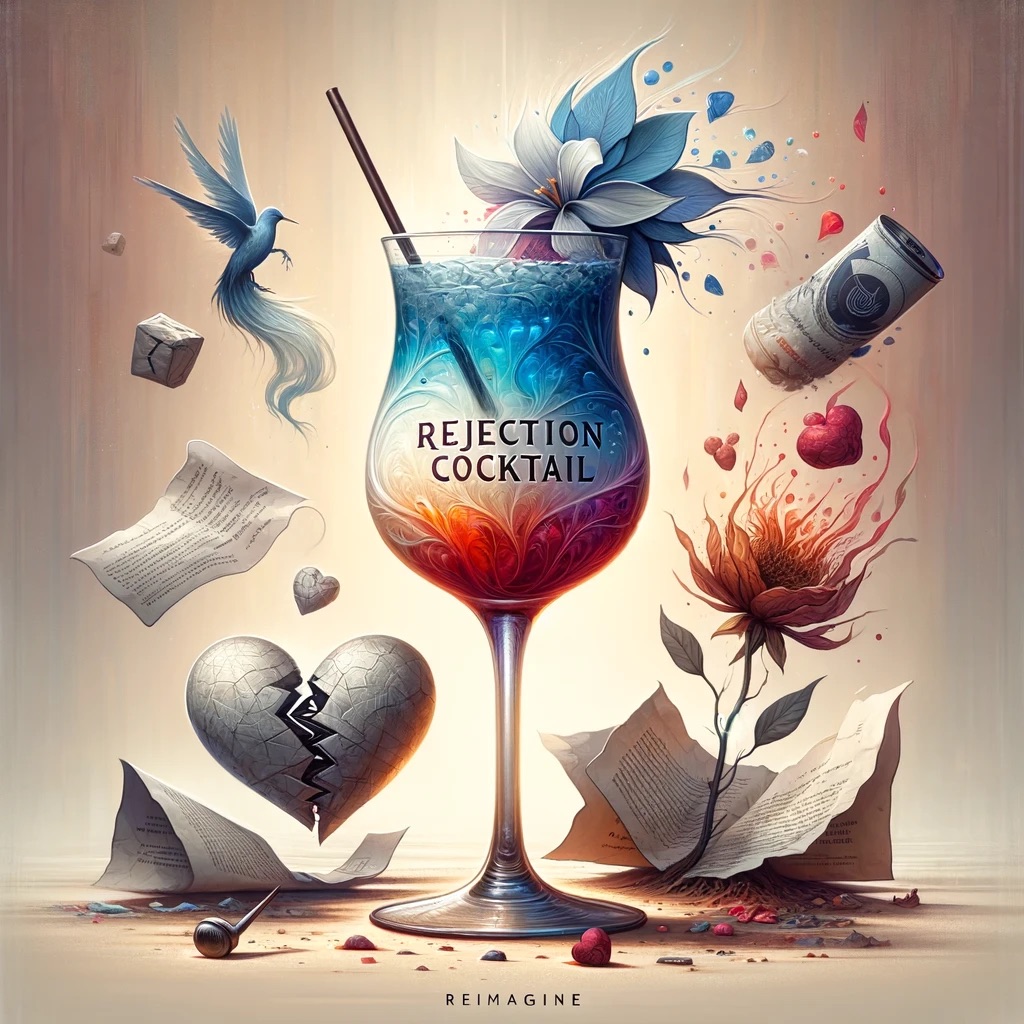
“The Rejection Cocktail” and “The Mental Hangover” are metaphoric concepts that vividly illustrate the emotional and psychological aftermath of experiencing rejection. Let’s explore this idea further to understand the dynamics of rejection and how they affect us.
The term “Rejection Cocktail” can be thought of as the mix of intense emotions and neurochemical reactions that occur in the brain when we experience rejection. This “cocktail” might include ingredients such as:
Stress Hormones: The release of cortisol, which can heighten feelings of stress and anxiety. Decreased Serotonin Levels: Leading to feelings of sadness and depression. Activation of the Pain Pathways: Like physical pain, rejection activates the anterior cingulate cortex, causing emotional pain. Dopamine Dysregulation: This can affect motivation, pleasure, and reward processing, making it hard to bounce back or engage in enjoyable activities.
This chemical cocktail can make us feel a whirlwind of emotions, including sadness, anxiety, anger, and loneliness, creating a challenging emotional state to navigate.
The Mental Hangover
Following the immediate impact of the “Rejection Cocktail” in the body, individuals often experience what can be likened to a “Mental Hangover.” This phase involves the lingering effects of rejection on our thoughts, feelings, and behaviors. It might include:
Rumination: Obsessively thinking about the rejection, analyzing what went wrong, and blaming oneself.
Low Self-Esteem: Persistent feelings of worthlessness and inadequacy.
Social Withdrawal: Avoiding social situations for fear of further rejection.
Difficulty Concentrating: Preoccupation with the rejection can disrupt focus and productivity.
Fear of Future Rejection: Becoming overly cautious or hesitant to put oneself in situations where rejection is possible.
Just as a physical hangover makes us vow never to drink again, a mental hangover from rejection might make us swear off taking risks or putting ourselves out there. However, just as with alcohol, the key isn’t to avoid all future exposure but to find healthy ways to cope and recover.
Rejection Can be addictive or manageable
The idea of the “Rejection Cocktail” being addictive or manageable, depending on factors like familiarity, emotional intelligence (EI), and physical intelligence, opens a fascinating perspective on how we process and react to rejection. Let’s explore how these elements influence our response to the cocktail of emotions and biochemical reactions triggered by rejection:
Familiarity with Rejection
Adaptation: Individuals who have experienced rejection frequently may become more accustomed to the sensation, potentially reducing the intensity of their reactions over time. This adaptation can be seen as a form of resilience, where the individual learns to cope more effectively with similar experiences in the future.
Risk of Negative Patterns: However, there’s also a risk that repeated exposure to rejection without effective coping mechanisms can lead to negative emotional patterns, including lowered self-esteem, chronic stress, or even depressive symptoms. In such cases, the “Rejection Cocktail” becomes a familiar but unwelcome experience that the person struggles to manage.
Emotional Intelligence (EI)
Awareness and Regulation: High emotional intelligence involves being aware of one’s emotions and being able to regulate them effectively. Individuals with high EI are better equipped to manage the emotional turbulence caused by rejection. They can recognize and label their feelings, understand why they feel a certain way, and employ strategies to navigate through these emotions constructively.
Perspective Taking and Empathy: EI also involves perspective-taking and empathy, which can help individuals understand that rejection may not always be personal or reflective of their worth, thus mitigating the impact of the “Rejection Cocktail.”
Physical Intelligence (PI)
Body Awareness: Physical intelligence includes being attuned to the signals and needs of one’s body. Physically intelligent individuals can better recognize the physiological manifestations of the “Rejection Cocktail” (e.g., tension, increased heart rate) and employ physical strategies (such as deep breathing, exercise, or relaxation techniques) to help regulate their body’s response.
Physical Coping Strategies: Physical activity, in particular, can be a powerful tool for managing the effects of rejection. Exercise releases endorphins, natural mood lifters, and helps metabolize stress hormones, facilitating a return to emotional equilibrium.
Addiction to the Rejection Cocktail
The concept of becoming “addicted” to the “Rejection Cocktail” might seem counterintuitive, given its unpleasant nature. However, in some cases, individuals may become subconsciously drawn to situations where rejection is likely driven by a familiarity with the emotional cycle it triggers can be related to:
Negative Self-Concept: A belief that one deserves to be rejected or is inherently unworthy of acceptance.
Seeking Intensity: For some, the intense emotions associated with rejection (even if negative) can feel more vivid or real than numbness or emotional flatness, leading to a cycle of seeking out these experiences.
In conclusion, the impact of the “Rejection Cocktail” and one’s ability to manage it depends significantly on factors like familiarity with rejection, emotional intelligence, and physical intelligence. Recognizing and developing skills in these areas can help individuals navigate the complexities of rejection with greater resilience and self-awareness.
Overcoming the hangover from rejection
To overcome a mental hangover from rejection, consider these five strategies:
1. Hydrate Your Soul: Engaging in activities that nourish your spirit is essential to overcoming a mental hangover from rejection. Just as water can help alleviate a physical hangover, finding joy in activities that bring you inner peace and happiness can help you recover emotionally. It could be anything that speaks to your soul – reading a book, painting, walking in nature, practicing yoga, or listening to music. These activities can help you shift your focus from rejection towards self-care and self-love.
2. Rest and Recover: It is important to allow yourself time to heal emotionally after experiencing rejection. Recognize that recovery is not instantaneous, and be patient with yourself. Permit yourself to take a break and rest. Use this time to reflect on your feelings, process the rejection, and learn from the experience. Give yourself the space you need to heal and rebuild your confidence.
3. Social Support: Lean on your friends and family during this challenging time. Sharing your feelings and experiences with trusted loved ones can help alleviate the burden of rejection. They can offer a listening ear, provide comfort, and offer different perspectives on the situation. Surrounding yourself with supportive individuals who uplift and encourage you can make a tremendous difference in overcoming a mental hangover from rejection.
4. Reframe Your Thoughts: Rejection can often lead to negative thoughts and self-doubt. To overcome a mental hangover, it is crucial to challenge these negative thoughts and reframe them in a more positive light. Instead of dwelling on what went wrong or blaming yourself, focus on the positive aspects of yourself and your life. Remind yourself of your strengths, achievements, and the value you bring. Practice self-compassion and remind yourself that rejection does not reflect your worth.
5. Professional Help: If the mental hangover from rejection persists and becomes overwhelming, seeking the help of a therapist or counselor can be beneficial. A professional can provide strategies to manage and move beyond these feelings. They can help you navigate through the emotions associated with rejection, provide guidance on building resilience, and offer tools to develop a healthy mindset. Therapy can be a safe space to explore your emotions, gain insights, and find effective ways to cope with rejection.
Remember, overcoming a mental hangover from rejection takes time and self-compassion. By implementing these strategies, you can gradually heal, regain confidence, and move forward positively.
Life Coaching Help!




 Transform
Leave a comment