I believe the fight for freedom of speech and the call for social responsibility and limits on speech is a sign that human societies are moving into an age where our ability to control masses of people and their ideas is getting out of hand. We live in a world where free speech advocates’ view of society is based on a desire for intellectual freedom. On the other hand, those calling for boundaries on free speech and advocating for responsible discourse are equally necessary for social cohesion and interaction.
What happens in a wourld where free speech and lack of censorship have no guardrails? Who protects the powerless voices in society? While everyone is calling for free speech, there is a more important point that has to be made in this discourse.
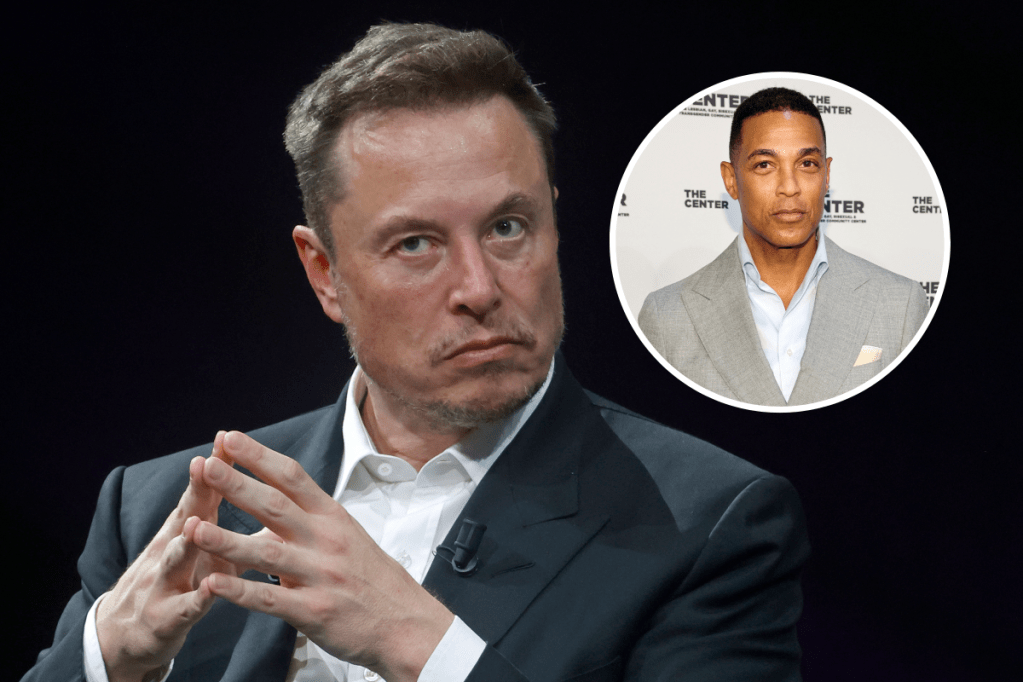
Elon Musk is a multibillionaire with unguarded power; during his interview with Don Lemon, his argument for free speech rested on the boundaries of the law. The law is his parameter on free speech, and his emphatic stance is a view into his mindset.
The idea that a billionaire innovator is calling for free speech and showing his desire to advocate for free speech by acquiring one of the world’s largest social media platforms is scary. It also shows his power and privilege.
Why is it scary? Because advocating for free speech by allowing public discourse to run rampant is not innovative, nor is it responsible management of power.
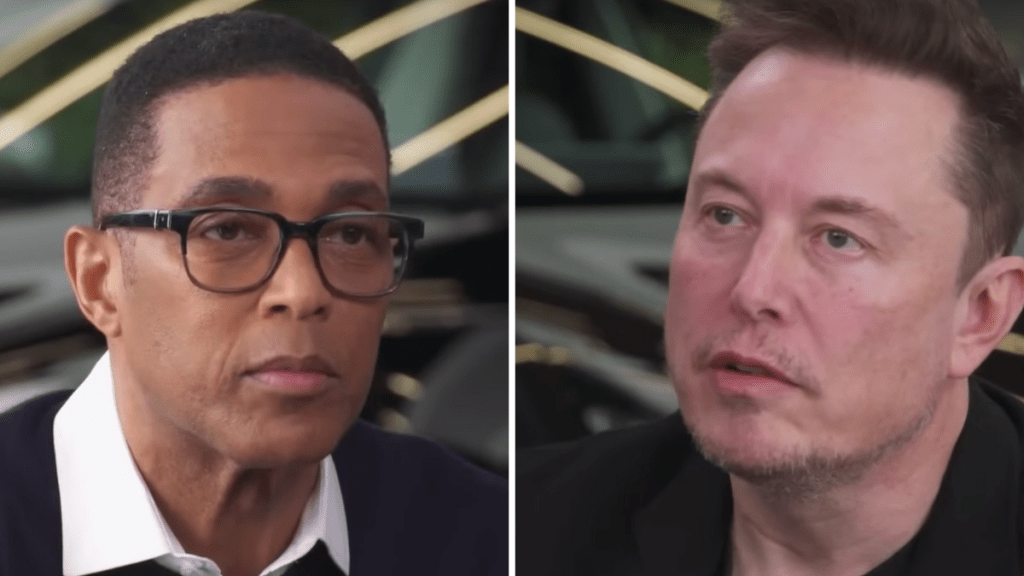
Watching Don Lemon’s interview with Elon Musk, I was captivated by what appeared to be two polarizing perspectives on free speech. Lemon wants free speech but with responsibility for how that speech is expressed and experienced. Elon Musk wants complete autonomy of free speech with the parameters set according to the law and not individual responsibility.
Both ideas seem to have very powerful points that need to be highlighted, but more importantly, the argument for both Lemon and Musk comes from the advantage point of both men.
A Clash Of Privilege
Elon Musk is used to a certain amount of freedom as a billionaire that well over 98 percent of society has never known or may never get to experience in their lifetime. Musk’s money allows him to say and do almost anything he wants within and outside the laws governing our public discourse and interactions with little to no consequences.
On the other hand, Don Lemon has lived his life burdened by the color of his skin and the limits of his job as a reporter. His power and freedom are micro-managed by the very media that is a construct of white privilege. The micro-management of Lemon’s freedom of speech is what the average citizen experiences daily. Not to mention, Lemon is constrained by law and to a different degree than Musk. Justice is not impartial, and Musk has an advantage and privilege inside and outside the boundaries of the law.
Black Privilefge vs. White Privlige
The two men came to a point of contention in the interview where Musk challenged Don Lemon’s privilege as a black man, emphasizing that the color of his skin does not burden him because of his privilege in life. What Musk does not get is Black achievement is not a privilege. It’s hard work and very often conciliatory to white privilege.
Elon Musk (White South African)family owned emarld mines in South Africa he has never known anything but privilege and wealth. According to yahoo.com
“Elon Musk was born in Pretoria, South Africa, in 1971. His family was very well-off, and he had a comfortable childhood. His mother, Maye Musk, was a successful model and dietitian, and his father, Errol Musk, was an engineer and real estate developer. This set him up for future success. He benefited from his family’s substantial wealth, privilege and resources.
In the 1980s, the Musk family got even richer. Errol Musk purchased an emerald mine in Zambia, which was incredibly profitable. It’s estimated that the Musk family wealth grew to over $100 million during the 1980s.”
Contrast Musk privileged upbringing to that of Don Lemon. According to a tweet in August 2013 Don Lemon says, “FYI i didn’t grow up rich, am product of unwed mother, dropped out of college, then realized i could be stuck or soar. i chose the latter.”
“Don Lemon was born on March 1, 1966, in Baton Rouge, Louisiana, to Katherine Marie (Bouligney) and Wilmon Lee Richardson. His father, a notable attorney, played a significant role in a legal case that led to the desegregation of public buses in Baton Rouge.
Lemon initially carried the surname of his mother’s husband at the time but learned Richardson was his biological father at the age of five. His heritage is predominantly African-American, with Creole influences; his maternal great-grandparents included a black woman and a white man of French and Scots-Irish descent. Lemon has shared that he experienced sexual abuse during his childhood. He was educated at Baker High School in East Baton Rouge Parish, where he was elected class president in his final year.
For his higher education, Lemon first attended Louisiana State University, where he identified as a Republican and supported Ronald Reagan. He ultimately earned his degree in broadcast journalism from Brooklyn College in 1996, when he was 30 years old. During his college years, he interned at WNYW and later worked for Fox News affiliates in St. Louis and Chicago. He also served as a correspondent for NBC’s affiliates in Philadelphia and Chicago.”
(Wikipedia.com)
These are two very different men who’s experiences are as vast as east and west. The very idea that there view of privilege would be the same is unremarkable.
What exactly was Elon trying to tell Don Lemon, and what was Don Lemon trying to tell Elon Musk about their privilege?
Both men recognized their privileged conditions and the power it afforded them, but the point of departure was in how the two men saw their privilege. Elon Musk is a multibillionaire advocating for free speech with parameters based on law rather than responsibility. Musk fails to see his privilege even with the law. It’s easy to advocate for the law when privileged by it.
Don Lemon, a multimillionaire with a uniquely different perspective, is limited by both his skin color and the laws, something Elon Musk cannot understand. The laws are written to support white privilege. Look at how Trump has been able to circumvent the law because of his wealth and privilege. Musk Is white and the richest man in the world. His argument for free speech to the extent the law would allow is offensive and irresponsible.
The two men and their ideas on freedom of speech are like trying to bridge two worlds divided by wormholes; the two minds cannot fathom the mental world of the other because they cannot break the sound barrier.
Musk will not advocate for freedom of speech with responsibility because he sees that as censorship (control). Musk says he doesn’t want any controls or guard rails on his speech. I’m sure he doesn’t parent his kids without guardrails. But, I digress!
We all need guardrails and controls; that’s why societies have agencies and institutions set up to control their citizenry. Can you imagine the nearly eight billion people on earth with no guardrails on their speech?
Musk and Don Lemon are experiencing two different realities. Don Lemon cannot fathom freedom of speech without responsibility because he lives under the law of white privilege. As a black man, he has experienced the consequences of not adhering to the parameters of what white privilege allows him. Don Lemon experiences the control of white power every day in his life with little resources to do anything about it. Don Lemon would never get away with saying and doing the things that Musk does, even within the bounds of the law.
Musk’s naivety to his privilege is astonishing because it’s normal for him. When pointed out, he feels offended because he assumes his hard work alone has afforded him his privilege. He tells Don Lemon this when pointing out Don’s privilege. However, white privilege and black privilege are stratified. Black privilege is often under the controlling umbrella of white privilege.
It’s my theory of how Black privilege has any merit at all in this country. There are to many atrocities that historically marked the end and beginning of Black privilege at the hand of white people.
Look at Black Wall Street, “Black Wall Street, former byname of the Greenwood neighborhood in Tulsa, Oklahoma, where in the early 20th century African Americans had created a self-sufficient prosperous business district. The neighborhood was targeted by a white mob in the Tulsa race massacre of 1921, in which more than 1,400 homes and businesses were burned, and nearly 10,000 people were left homeless. The area eventually recovered, but declined following desegregation in the late 1950s. The name has also been applied more generally to districts of Black American high economic activity.
According to Black Entertainment Television Not Just Tulsa: Race Massacres That Devastated Black Communities In Rosewood, Atlanta, and Other American Cities | News | BET
In order not to worry your patience I ask you to follow the link above for more details.
Two Different Conversations
The conversation I witnessed was two men speaking from different vantage points. There was a moment in the interview where Elon Musk and Don Lemon experienced a mental void that neither man could cross, and their facial expressions were so powerful. It was as if the two men had spotted each other in distant galaxies. It was as if they read each other’s minds and realized the gap could never be bridged. It was the most powerful moment in the entire interview.
Take a look at this conversation on privilege and take a close look at the very end of this video.
This clash of privilege highlighted the fundamental problem in the fight for freedom of speech. While Musk believed in the power of law as the only parameter for speech, Lemon, as a marginalized individual, understood the importance of responsible discourse to protect the powerless voices in society.
In a world where free speech has no guardrails, those without power and privilege become even more vulnerable. The voices of the marginalized, already stifled by systemic oppression, can easily be drowned out by the loud and influential. Musk, with his immense wealth and power, epitomized the potential dangers of unregulated speech. His ability to acquire one of the largest platforms in the world showcased the unchecked influence that billionaires have over public discourse.
Advocating for free speech without responsible power management is not innovative but perpetuates existing inequalities. While Musk may argue that the law should be the sole parameter for speech, Lemon understood that the law itself can be biased and discriminatory, especially towards marginalized communities. The experience of living as a black man in a society that constantly micro-manages his freedom of speech gave Lemon a perspective that Musk, shielded by his privilege, could never truly comprehend.
The moment in the interview where Musk challenged Lemon’s privilege as a black man was a stark reminder of the vast chasm that existed between their realities. Musk’s inability to understand the limitations imposed by systemic racism further emphasized the need for responsible discourse and the protection of marginalized voices. The power dynamics at play became glaringly apparent, leaving both men unable to bridge the divide between their perspectives.
In this clash of viewpoints, it became evident that the fight for freedom of speech must consider the experiences and voices of those who have historically been silenced. It is not enough to rely solely on the law as the parameter for speech; responsible power management and consideration for the vulnerable are essential. The conversation between Musk and Lemon served as a reminder that true progress can only be achieved when the realities of all individuals are taken into account.

 Transform
Leave a comment