
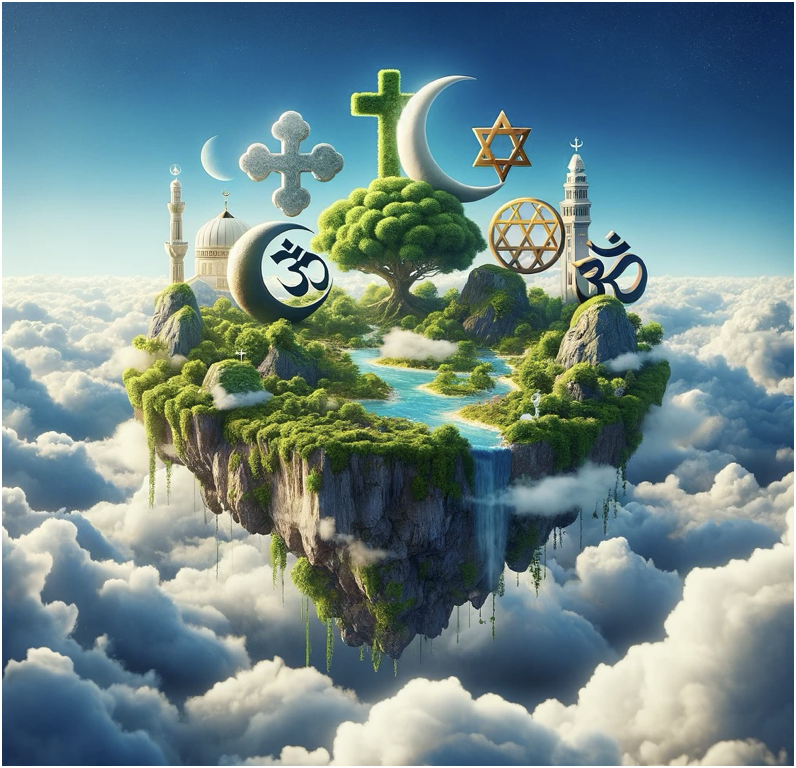
Religious symbolism has always been vital in shaping and solidifying religious doctrine. Throughout history, various religious traditions have utilized symbols to convey profound truths, facilitate spiritual experiences, and foster a deeper understanding of their teachings.
Symbols serve as powerful tools that transcend the limitations of language, allowing individuals to access and comprehend complex theological concepts more intuitively and tangibly. These symbols can be found in various forms, such as objects, gestures, rituals, and even natural elements. Their meanings are often deeply rooted in cultural, historical, and mythological contexts, adding depth and significance to religious doctrines.
One of the primary functions of religious symbolism is to convey abstract ideas that may otherwise be challenging to grasp intellectually. For example, the cross, a universally recognized Christian symbol, represents the crucifixion and resurrection of Jesus Christ. It encapsulates the core beliefs of Christianity, reminding believers of the sacrifice and redemption central to their faith. The image of the lotus flower in Buddhism represents purity and the potential for enlightenment, encapsulating the teachings of the Buddha in a single, visually striking symbol.
Moreover, religious symbols can evoke powerful emotions and create a sense of shared identity and community among believers. When individuals see or engage with a symbol of deep religious significance, it can elicit a profound spiritual experience, fostering a connection to the divine and reinforcing their faith. This communal experience reinforces the foundation of religious doctrine, as it allows individuals to collectively participate in the rituals and practices that are central to their belief system.
Religious symbolism also serves as a means of transmitting knowledge and preserving traditions across generations. By encapsulating complex theological concepts within symbols, religious teachings can be easily communicated and understood by individuals of varying levels of education and intellect. They act as mnemonic devices, enabling believers to remember and pass down important doctrines and principles from one generation to another.
However, it is essential to recognize that religious symbolism can also be subject to different interpretations and potential conflicts. The diverse cultural, historical, and individual contexts within which symbols exist can lead to varying understandings and even disagreements among different groups or sects within a religion. Therefore, the interpretation and application of religious symbols require careful examination and guidance from religious authorities to ensure the integrity and unity of the doctrine.
In conclusion, religious symbolism is the foundation of doctrine by conveying profound truths, facilitating spiritual experiences, fostering shared identity, transmitting knowledge, and preserving traditions. Its power lies in its ability to transcend language and convey complex theological concepts tangibly and intuitively. As religious traditions evolve and adapt, religious symbolism remains crucial in shaping and reinforcing the beliefs and practices that define each faith.




 Transform
Leave a comment