Checkout this feature documentary that follows the story of tireless researchers who trace the origins of the anti-gay movement among Christians to a grave mistranslation of the Bible in 1946.
“It chronicles the discovery of never-before-seen archives at Yale University which unveil astonishing new revelations, and casts significant doubt on any biblical basis for LGBTQIA+ prejudice. Featuring commentary from prominent scholars as well as opposing pastors, including the personal stories of the film’s creators, 1946 is at once challenging, enlightening, and inspiring.
While other documentaries have been successful in their attempt to treat the symptoms of homophobia in the church, 1946 is working to diagnose and treat the disease – Biblical Literalism.”
The is one mistranslated word that means “boy molester” not homosexual. This is why the church is filled with child molesters because they gave themselves license to abuse little boys by condemning consenting adult male relationships which were never condemned anywhere in the Bible. Ask yourself why is it only male same-sex relationships condemned and not females who ly with females. The agenda is obvious. Translators wanted to overlook the obomination of men molesting young boys and refocus it’s translation in same-sex relationships.”
“Arsenokoitai” Shows up in Leviticus the only two verses used to condemn homosexuality. However it doesn’t it condemns men molesting little boys which the Catholic Church and man prominent churches are caught doing all the times. By mistranslating this verse it removes the divine protection of young innocent little boys.
I want you to check out the link below to get a full understanding of why the cover up is so severe.
Click This LinkRead The Full Articke
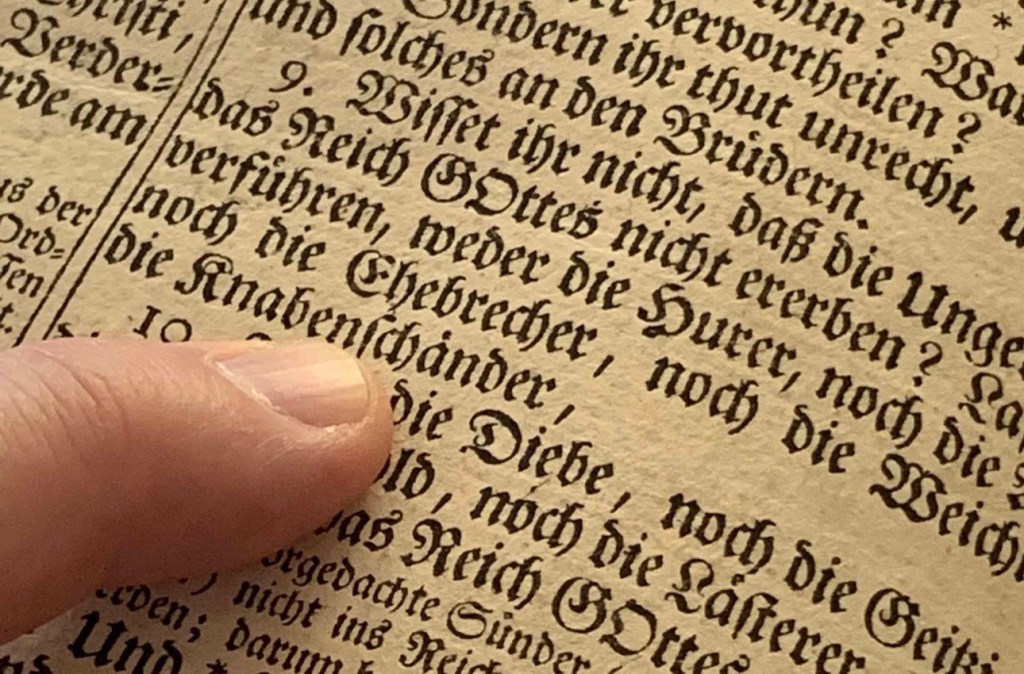
“I also have a 1674 Swedish translation and an 1830 Norwegian translation of the Bible. I asked one of my friends, who was attending Fuller seminary and is fluent in both Swedish and Norwegian, to look at these verses for me. So we met at a coffee shop in Pasadena with my old Bibles. (She didn’t really know why I was asking.) Just like reading an old English Bible, it’s not easy to read.
The letters are a little bit funky, the spelling is a little bit different. So she’s going through it carefully, and then her face comes up, “Do you know what this says?!” and I said, “No! That’s why you are here!” She said, “It says boy abusers, boy molesters.” It turns out that the ancient world condoned and encouraged a system whereby young boys (8-12 years old) were coupled by older men. Ancient Greek documents show us how even parents utilized this abusive system to help their sons advance in society. So for most of history, most translations thought these verses were obviously referring the pederasty, not homosexuality!”
Research Shows
Several conclusions can be drawn about the word “arsenokoitai”:
- Complex and Uncertain Meaning: “Arsenokoitai” is an ancient Greek word found in the New Testament, specifically in 1 Corinthians 6:9-10 and 1 Timothy 1:9-10. Its exact meaning is complex and subject to debate among scholars, theologians, and translators.
- Compound Word: It is a compound word, derived from “arsén” (male) and “koité” (bed). However, the direct translation of “male-bed” doesn’t provide a clear understanding of its meaning in the biblical context.
- Variation in Historical Translation: Historically, the word has been translated in various ways, including “liers with mankind,” “sodomites,” “abusers of themselves with mankind,” and later as “homosexuals.” These translations reflect evolving understandings and cultural contexts.
- Shift in Interpretation: There was a significant shift in the interpretation of “arsenokoitai” around the 1940s. Earlier translations suggested roles in sexual acts, whereas later translations, like the Revised Standard Version, began interpreting it as “homosexual,” aligning it more with identity rather than behavior.
- Lack of Consensus: There is no scholarly consensus on the exact meaning. Some interpretations suggest it refers to any form of non-procreative sexual acts, while others argue it could mean sexual exploitation or abuse, potentially in the context of pederasty or prostitution.
- Cultural and Historical Context: Understanding “arsenokoitai” requires considering the cultural and historical context of the times when the New Testament was written. The concept of sexual orientation as understood today did not exist in the same form in the first century.
- Impact on LGBTQIA2S+ Community: The interpretation of “arsenokoitai” has significantly impacted the LGBTQIA2S+ community, particularly in Christian contexts. Misinterpretations or rigid literal translations have contributed to discrimination and exclusion.
In summary, “arsenokoitai” is a term with a complex history and interpretation, deeply embedded in cultural, historical, and linguistic contexts. Its translation and understanding have evolved over time, affecting theological discussions and social attitudes, especially regarding sexuality and gender identity.
Don’t judge where there is no judgement and don’t attribute human understanding and attribute it to God. It is important to be nonjudgmental, it emphasizes a thoughtful and considerate approach to interpretation and judgment, especially in matters of faith and spirituality. It suggests caution in applying human interpretations to divine concepts and underscores the importance of refraining from judgment in areas where definitive understanding may be lacking or uncertain. This perspective aligns with a broader, more inclusive approach to theological and moral considerations, acknowledging the complexities and limitations of human understanding in the context of divine teachings.
Man often takes “religious” text and use it to support the social construct of religion.
Throughout history, religious texts have often been interpreted and used to support or justify various social constructs and practices within organized religion. This usage reflects the interaction between religious teachings, cultural norms, and societal values. Here are some key points regarding this phenomenon:
- Contextual Interpretation: Religious texts are frequently interpreted through the lens of contemporary social, cultural, and political contexts. This can lead to diverse and sometimes conflicting interpretations of the same texts.
- Supporting Existing Beliefs and Practices: People and institutions often use religious texts to support pre-existing beliefs or practices. This can reinforce social norms or justify certain behaviors within the context of religious teachings.
- Power and Control: In some cases, religious texts are used by those in power to maintain control or to impose certain moral or ethical standards on a community.
- Evolution of Interpretation: As societies evolve, interpretations of religious texts can also change. This is evident in the shifting attitudes towards issues like gender equality, slavery, and LGBTQ+ rights.
- Selective Emphasis: Different groups may emphasize different aspects of religious texts, leading to varied focuses and practices within the same religious tradition.
- Human Element in Interpretation: The interpretation of religious texts is inherently a human activity, subject to biases, perspectives, and the limited understanding of individuals or groups.
Recognizing these dynamics is important for a nuanced understanding of how religious teachings intersect with societal structures and practices. It also underscores the need for critical thinking and open-mindedness in discussions about religion and its role in society.
Copyright 2024 MindSnap Social




 Transform
Leave a comment